When I was a kid, the drive between my mom’s house and my dad’s took me past the Prado Dam here in Southern California. Someone had painted a massive mural across it for the country’s bicentennial, 200 years of freedom, with 1776 and 1976 stacked underneath. I had no idea what any of that meant at the time. I just knew it was big, and it stuck with me.
This summer marked the 250th anniversary of the signing of the Declaration of Independence, and that memory came roaring back while my co-host Brent Sonnek-Schmelz and I were recording a recent episode of our podcast, The Flywheel Effect. We got to talking about America turning 250, and somewhere in that conversation we landed on an idea that has nothing to do with history and everything to do with how custom integration business owners actually run their companies. This is the first of three articles built around that conversation. This one is about fear, and where it comes from.
Also by Matt Bernath: The Goal-Setting Framework That Works
Here’s a fact Brent dropped on me that I haven’t been able to shake. The bowhead whale is the longest living mammal on the planet, and some of them currently swimming in the North Atlantic were alive when the Declaration of Independence was signed. There are whales older than the country we live in.
Most of us who own or run a custom integration business are living in a much smaller window than that. Thirty days. Sixty if we’re lucky. Will we make payroll next month? Will this project close in time to cover the quarter? Did we price that last job too low because we were scared to lose it? We make decisions inside a window of fear measured in weeks, sometimes days, and that window shapes almost everything else we do.
I’ve watched this play out the same way more times than I can count. A slow February hits, and instead of treating it as one data point in a long year, an owner pulls back on marketing they needed or delays the hire that would have fixed the bottleneck everyone’s been complaining about for months. The decision feels responsible in the moment. It usually costs more over the following year than the slow month ever would have on its own.
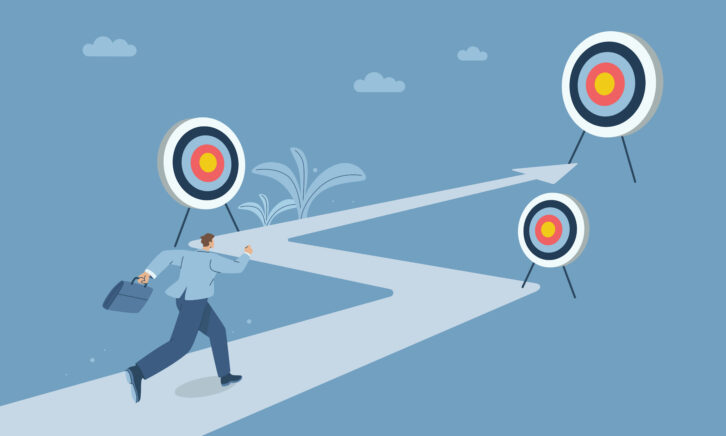
Two hundred and fifty years sounds like an unimaginable stretch of time, until you do a little math. Twenty-five years, a quarter-century, is only one-tenth of how long this country has existed. It’s also roughly a third of a working life. If you carved out one of those 25-year chunks for your business, what could you actually build in it?
That question changes the shape of a lot of decisions. The owner thinking in 30-day windows hires reactively, because the fear of being short-staffed outweighs the discipline of hiring well. They underprice a job because losing it feels like an emergency. They put off the systems work, the documentation, the leadership development because none of that solves this month’s problem, even though all of it solves next year’s problem many times over.
The owner thinking in 25-year windows still has plenty at stake. They’re building something meant to outlast them, which is its own kind of pressure. But the longer time horizon changes the math on risk. A bad month inside a 25-year plan is a data point worth noting. A bad month, when that’s all you can see, becomes a crisis.
There’s a similar logic in financial planning. When you’re in your 20s, you can take real swings with your money because you have decades to recover if something goes sideways. By the time you’re in your 60s, that same swing could be reckless because the runway to recover isn’t there. The same logic applies to how we run our businesses. The lesson isn’t to relax because you have plenty of time. The lesson is to plan longer so you fear less, because a longer runway lets you absorb a bad quarter without treating it like a referendum on the whole business.
None of this is an argument for being careless. It’s an argument for separating what threatens the business from what only feels threatening in the moment. A slow month feels like an emergency when you’re only looking 30 days out. It barely registers when you’re looking 25 years out, especially once you’ve built a company that can absorb it.
Also by Matt Bernath: Why Good Managers Fail at Innovation
That longer frame is also what makes certain decisions possible in the first place. Hiring a general manager so you can step back from daily operations doesn’t pay off in 30 days. Building a recurring revenue program doesn’t pay off in 30 days. Training your next generation of technicians instead of just hiring around the gap doesn’t pay off in 30 days either. All three of those decisions are obvious once you’re thinking in 25-year terms. None of them survive a 30-day fear window.
The people who wrote the document we’re celebrating this year were not operating from a place of certainty. They had their own businesses, their own families, and their own very real fears about what might happen to them personally if the whole experiment failed. They built something that has lasted 250 years while carrying all of that. They kept their eyes on something bigger than the next month, and that’s what carried them through it.
Zooming out doesn’t make fear vanish, but it does loosen fear’s grip on every decision you make. Once a slow month stops feeling like a five-alarm fire, you free up the mental and financial bandwidth to build something worth building.
Which raises the next question, the one we’ll dig into next month: Once you’ve stopped making decisions out of fear, the next trap waiting for you is speed. How fast is too fast to grow a business well? That’s where this series goes next.
If this kind of conversation is interesting to you, the full episode that sparked this article is available on The Flywheel Effect podcast, wherever you listen to your shows. Brent and I get into a lot more than made it onto this page, including some history that has nothing to do with business and everything to do with why we both love this country.